
The classroom was silent, but not calm. A student stood in front of the board, trying to explain an idea. The words were in mind, but the sentence structure felt weak. The teacher stopped him gently and said, “You are not just using communication… think about interaction, expression, exchange of ideas.” That small correction changed everything.
“Communication is the bridge between confusion and understanding.”
The student suddenly realized that communication is not a single word. It has many forms, many meanings, and many styles. This is where synonyms of communication become extremely powerful for learners.
“Better vocabulary creates better expression.”
In simple English, communication means sharing thoughts, ideas, or feelings with others. But in real life, we do not repeat the same word again and again. We use different words based on situation, tone, and purpose.
For students, bloggers, writers, and English learners, learning synonyms of communication improves vocabulary, writing flow, and speaking confidence. It also helps in exams, essays, emails, and digital content writing.
“Words are not just sounds, they are connections between minds.”
When you learn synonyms, you don’t just learn words you learn how people truly connect in real life.
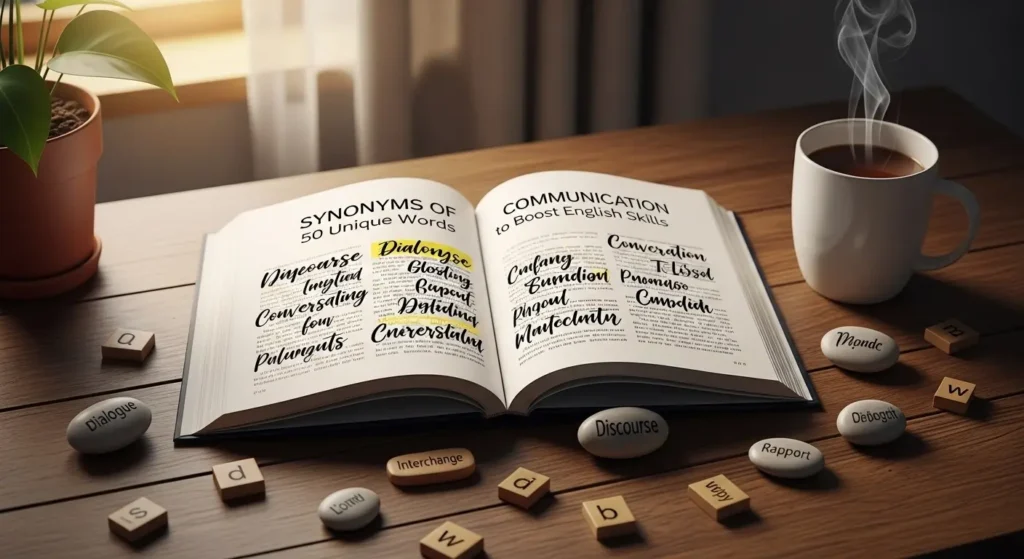
50 SYNONYMS OF COMMUNICATION
1. Interaction
Meaning: When people talk or respond to each other.
Examples:
- Teacher interaction improves learning.
- Online interaction helps students connect easily.
2. Conversation
Meaning: A friendly talk between people.
Examples:
- We had a long conversation after class.
- Their conversation was very interesting.
3. Dialogue
Meaning: A formal exchange of words.
Examples:
- The movie had powerful dialogue.
- Students practiced dialogue writing in class.
4. Discussion
Meaning: Talking about a topic to share ideas.
Examples:
- We had a group discussion today.
- Class discussion helped everyone understand.
5. Exchange
Meaning: Sharing ideas or information with others.
Examples:
- Exchange of ideas was very useful.
- Students exchange notes before exams.
6. Correspondence
Meaning: Written communication like letters or emails.
Examples:
- Email correspondence is very common.
- They kept correspondence for years.
7. Messaging
Meaning: Sending short written messages.
Examples:
- Messaging is fast and easy.
- I use messaging apps daily.
8. Talking
Meaning: Speaking informally with others.
Examples:
- They were talking in the park.
- Talking helps solve misunderstandings.
9. Speaking
Meaning: Expressing thoughts using voice.
Examples:
- She is speaking clearly on stage.
- Speaking improves confidence.
10. Speech
Meaning: A formal spoken presentation.
Examples:
- He gave a powerful speech.
- The speech inspired students.
11. Discourse
Meaning: Formal discussion or communication.
Examples:
- Academic discourse is important.
- Political discourse shapes opinions.
12. Transmission
Meaning: Sending information from one place to another.
Examples:
- Data transmission is very fast.
- Signal transmission was strong.
13. Expression
Meaning: Showing thoughts or feelings.
Examples:
- Facial expression shows emotions.
- Writing is a form of expression.
14. Articulation
Meaning: Speaking words clearly.
Examples:
- His articulation was perfect.
- Clear articulation improves learning.
15. Networking
Meaning: Building professional connections.
Examples:
- Networking helps in career growth.
- She enjoys networking events.
16. Broadcasting
Meaning: Sending information to a large audience.
Examples:
- News broadcasting is live.
- Radio broadcasting is still popular.
17. Reporting
Meaning: Giving information about events.
Examples:
- The reporter is reporting live.
- Reporting news must be accurate.
18. Announcement
Meaning: Public sharing of information.
Examples:
- School announcement was made.
- The announcement surprised everyone.
19. Liaison
Meaning: Communication link between groups.
Examples:
- He is liaison officer.
- Liaison improves teamwork.
20. Contact
Meaning: Connection with someone.
Examples:
- Keep contact with friends.
- I lost contact with him.
21. Connection
Meaning: A link between people or ideas.
Examples:
- Internet connection is strong.
- They have emotional connection.
22. Debate
Meaning: Formal argument on a topic.
Examples:
- Students joined debate competition.
- The debate was very intense.
23. Chat
Meaning: Casual friendly talk.
Examples:
- We had a quick chat.
- Online chat is very common.
24. Negotiation
Meaning: Discussion to reach agreement.
Examples:
- Business negotiation was successful.
- Negotiation is still ongoing.
25. Consultation
Meaning: Asking advice through discussion.
Examples:
- Doctor consultation is important.
- Legal consultation helped him.
26. Signal
Meaning: A sign used to send information.
Examples:
- Mobile signal is weak here.
- Traffic signals control movement.
27. Relay
Meaning: Passing information to others.
Examples:
- He relayed the message quickly.
- The news relay was accurate.
28. Sharing
Meaning: Giving information to others.
Examples:
- Sharing ideas improves teamwork.
- Social sharing is very common.
29. Feedback
Meaning: Response to a message or action.
Examples:
- The teacher gave feedback on the essay.
- Feedback helps improvement.
30. Outreach
Meaning: Connecting with more people.
Examples:
- Community outreach was successful.
- Outreach programs help society.
31. Visual communication
Meaning: Using images or visuals to share ideas.
Examples:
- Charts are visual communication tools.
- Visual communication helps learning.
32. Digital communication
Meaning: Communication using technology.
Examples:
- Digital communication is fast.
- We use digital communication daily.
33. Interpersonal communication
Meaning: Communication between individuals.
Examples:
- Interpersonal communication builds trust.
- Good interpersonal communication is key.
34. Mass communication
Meaning: Sharing information with a large audience.
Examples:
- TV is a mass communication medium.
- Mass communication spreads news fast.
35. Oral communication
Meaning: Speaking face to face.
Examples:
- Oral communication builds confidence.
- Teachers use oral communication daily.
36. Written communication
Meaning: Using written words to share ideas.
Examples:
- Written communication is formal.
- Emails are written communication.
37. Nonverbal communication
Meaning: Using body language or gestures.
Examples:
- Nonverbal communication shows feelings.
- Smile is nonverbal communication.
38. Social communication
Meaning: Interaction in society.
Examples:
- Social communication builds relationships.
- Social communication is important.
39. Messaging system
Meaning: System used for sending messages.
Examples:
- The messaging system is very fast.
- Schools use messaging systems.
40. Expression flow
Meaning: Smooth flow of ideas.
Examples:
- Expression flow was natural.
- Good flow improves writing.
41. Addressing
Meaning: Speaking directly to people.
Examples:
- He is addressing the class.
- Addressing issues is important.
42. Presentation
Meaning: Showing ideas formally.
Examples:
- His presentation was excellent.
- Students gave presentations.
43. Statement
Meaning: A clear message or declaration.
Examples:
- He gave a statement.
- The statement was simple and clear.
44. Declaration
Meaning: Official announcement.
Examples:
- A government declaration was made.
- The declaration surprised everyone.
45. Notification
Meaning: Alert or message.
Examples:
- Phone notification arrived.
- School notification was sent.
46. Channeling
Meaning: Sending ideas through a medium.
Examples:
- Channeling ideas is useful.
- Energy channeling helps focus.
47. Conveyance
Meaning: Transfer of information.
Examples:
- Conveyance of messages was fast.
- Written conveyance is clear.
48. Interaction flow
Meaning: Smooth communication process.
Examples:
- Interaction flow was smooth.
- Flow improves communication.
49. Verbal exchange
Meaning: Spoken sharing of ideas.
Examples:
- Verbal exchange was polite.
- Quick verbal exchange happened.
50. Information exchange
Meaning: Mutual sharing of information.
Examples:
- Information exchange is useful.
- Exchange improves teamwork.
🧠 INTERACTIVE EXERCISES
🟢 Exercise 1: MCQs
- Formal talk is called:
- A) Chat
- B) Speech
- C) Signal
🟡 Exercise 2: Fill in the blanks
- ______ helps in sharing ideas clearly.
- Email ______ is used in offices.
- Body language is ______ communication.
🔵 Exercise 3: Match the Following
- Debate → Argument discussion
- Broadcasting → Mass sharing of news
- Networking → Building connections
CONCLUSION
Learning synonyms of communication is one of the most powerful ways to improve English vocabulary, speaking skills, and writing ability. When learners understand different words for the same idea, they gain flexibility in expression and confidence in communication. Instead of repeating the same word again and again, they can choose from many alternatives depending on the situation, tone, and purpose.
“Strong vocabulary builds strong communication skills.”
In academic life, these synonyms help students write better essays, improve answers, and perform well in exams. Teachers always appreciate variety in language because it shows understanding and creativity. In professional life, communication plays a major role in interviews, meetings, presentations, and emails. Using the right synonym at the right time creates a strong impression and shows strong language control.
For bloggers, writers, and content creators, synonyms are extremely important. They improve SEO performance, make content more readable, and reduce repetition. This leads to higher engagement and better ranking on search engines. That is why professional writers always use varied vocabulary instead of repeating the same word.
“Every new word opens a new way to express yourself.”
In daily life, communication skills help in building relationships. Whether you are talking to friends, sending messages, or speaking in public, better vocabulary makes you sound more confident and clear. It also reduces misunderstandings and improves connection between people.
“Words shape thoughts, and thoughts shape success.”
Practice these synonyms regularly in writing, speaking, emails, and social media. The more you use them, the more natural they become in your daily life. Over time, your English will become more fluent, professional, and impact. Mastering synonyms of communication is not just learning language it is learning how to connect better with the world.