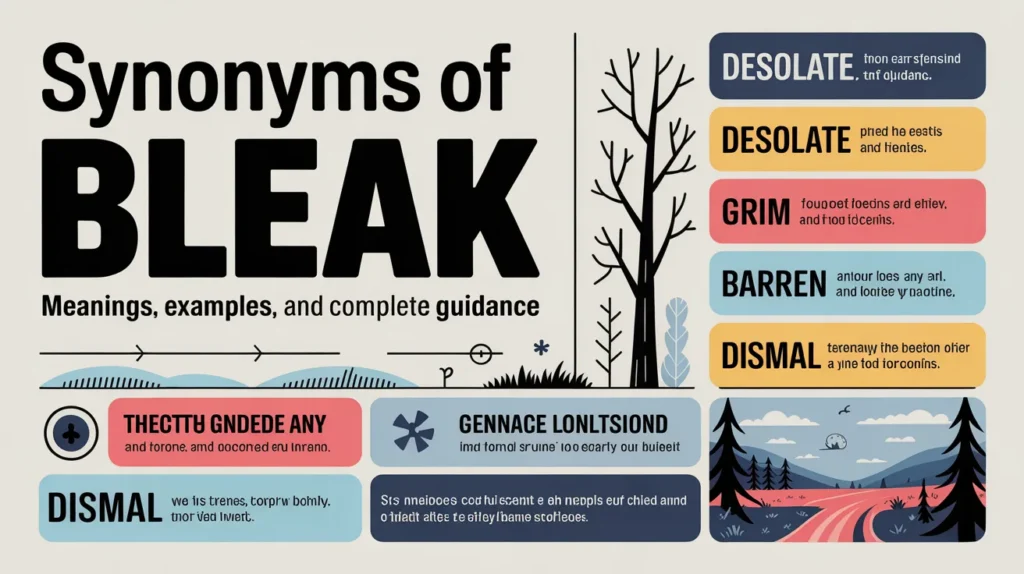

The synonyms of bleak are words that have similar meanings to bleak, such as gloomy, empty, cold, hopeless, depressing, or dull. The bleak meaning is very simple: it describes something that feels dark, sad, empty, or without hope. We often use bleak for weather, places, or life situations that feel unpleasant or emotionally low. The synonyms of bleak help us express the same idea in many different ways in English.
“A single word like bleak can describe a whole emotional world.”
Think about a silent road on a cold, rainy night. No lights,people. No sound. That feeling is bleak. A student waiting for bad exam results may also feel bleak. This word is very useful in daily English because it clearly shows emotion in a simple way.
The synonyms of bleak are very helpful for students, bloggers, content writers, and daily English users. Students use them in essays and exams. Bloggers use them to make writing more interesting. Writers use them to avoid repeating the same word again and again.
“Words are powerful when they clearly show human emotion.”
Using the synonyms of bleak improves vocabulary, writing fluency, and communication skills.
What is a synonym for the word bleak?
A synonym for bleak is a word that carries a similar meaning, such as dark, empty, sad, or without hope. These words are used when we want to describe unpleasant or low emotional situations in different ways.
In English writing, synonyms help us avoid repetition and make sentences more powerful and natural.
- used to describe sad or empty situations
- helps avoid repeating the same word
- improves writing style and fluency
What is the opposite of bleak?
The opposite of bleak describes something bright, happy, hopeful, or full of life. These words show positive emotions instead of sadness or emptiness.
We use the antonyms of bleak when we want to show improvement, happiness, or good future expectations.
- shows positive emotions and hopeful situations
- used for good weather, mood, or future
- important for contrast in essays and speaking
What are 5 synonyms and antonyms?
This topic helps learners understand both similar and opposite words of bleak together. It is very useful for exams and vocabulary building.
- synonyms: gloomy, grim, dull, dreary, somber
- antonyms: bright, joyful, cheerful, lively, hopeful
- useful for essays, exams, and speaking practice
What does bleak mean?
Bleak means something that feels empty, cold, dark, or without hope. It is used for weather, places, or emotions.
- describes sad or empty situations
- used for weather, places, and feelings
- shows lack of hope or happiness
Synonyms of bleak in english
The synonyms of bleak in English are words that replace bleak in different contexts. These words make writing more interesting and less repetitive.
- gloomy (dark and sad feeling)
- dreary (boring and depressing atmosphere)
- barren (empty and lifeless place)
Bleak meaning
The bleak meaning is very simple: something that is dark, empty, or without hope. It is used in daily English communication.
- means hopeless or empty feeling
- used in emotional descriptions
- common in news and storytelling
Bleak synonym and antonym
This explains both similar and opposite words of bleak in one place. It helps learners understand full vocabulary context.
- synonym examples: grim, dull, gloomy
- antonym examples: bright, cheerful, lively
- helps in vocabulary and grammar improvement
Synonyms of bleak slang
In slang English, people use informal words instead of bleak to describe bad or low situations.
- dead (no energy or excitement)
- rough (difficult situation)
- low (feeling sad or down)
Bleak synonym starts with m
Some synonyms of bleak start with the letter M. These words are useful in advanced vocabulary and writing.
- miserable (very unhappy or sad)
- morose (quiet and unhappy mood)
- muted (soft or dull emotion)
Bleak sentence
A bleak sentence shows how the word is used in real-life English.
- The weather looked bleak and cold with no sunlight.
- His future felt bleak after losing the job.
- The city appeared bleak after the storm passed.
Bleak synonym 6 letters
These are 6-letter words related to the meaning of bleak. They are useful for vocabulary tests and word games.
- dismal (sad and depressing)
- barren (empty and lifeless)
- gloomy (dark and unhappy)
Bleaker synonym
Bleaker is the comparative form of bleak. It means even more sad, empty, or hopeless.
- darker (more sad or serious)
- worse (more negative condition)
- colder (more emotionless or harsh)
🔷 COMPARISON TABLE (Synonyms of Bleak Keywords)
| Keyword | Meaning | Usage Type | Context |
|---|---|---|---|
| What is a synonym for the word bleak? | Similar words like gloomy or empty | Formal | Vocabulary learning, exams |
| What is the opposite of bleak? | Positive words like bright or hopeful | Formal | Writing, contrast sentences |
| What are 5 synonyms and antonyms? | List of similar and opposite words | Educational | Exams, grammar practice |
| What does bleak mean? | Dark, empty, or hopeless situation | Formal/Simple | General English use |
| Synonyms of bleak in english | English replacement words for bleak | Formal | Writing, essays, blogs |
| Bleak meaning | Basic definition of bleak | Simple | Learning and understanding |
| Bleak synonym and antonym | Both similar and opposite words | Educational | Vocabulary building |
| Synonyms of bleak slang | Informal words like low or rough | Casual | Daily conversation, social media |
| Bleak synonym starts with m | Words starting with M like miserable | Advanced | Creative writing, vocabulary tests |
| Bleak sentence | Example usage of bleak in sentences | Practical | Writing practice, exams |
| Bleak synonym 6 letters | Six-letter words like dismal or barren | Educational | Word games, puzzles, exams |
| Bleaker synonym | Comparative form meaning more bleak | Formal | Grammar, storytelling contexts |
MAIN SYNONYMS LIST
1. Gloomy
Meaning: Gloomy means dark, sad, or depressing in mood or environment.
Examples:
- The sky looked gloomy before the rain started.
- She felt gloomy after hearing the bad news.
- The room felt gloomy without any light.
2. Dull
Meaning: Dull means not bright, not interesting, or without energy.
Examples:
- The movie was dull and boring.
- His voice sounded dull during the meeting.
- The room looked dull without decorations.
3. Grim
Meaning: Grim means very serious, harsh, or worrying.
Examples:
- The doctor gave a grim report.
- The situation looked grim after the accident.
- He had a grim expression on his face.
4. Dreary
Meaning: Dreary means boring, dull, and depressing.
Examples:
- It was a dreary rainy morning.
- The town looked dreary in winter.
- She described her job as dreary.
5. Desolate
Meaning: Desolate means empty, lonely, and abandoned.
Examples:
- The desert looked desolate.
- The village felt desolate at night.
- The old house was desolate and broken.
6. Barren
Meaning: Barren means empty, lifeless, or without growth.
Examples:
- The land was barren and dry.
- The hills looked barren in summer.
- The field remained barren for years.
7. Harsh
Meaning: Harsh means very rough, unpleasant, or severe.
Examples:
- The weather was harsh in the mountains.
- He faced harsh criticism at work.
- The teacher gave a harsh warning.
8. Cold
Meaning: Cold means without warmth, emotion, or kindness.
Examples:
- She gave a cold reply.
- The room felt cold and empty.
- His attitude was cold and distant.
9. Empty
Meaning: Empty means having nothing inside or feeling void.
Examples:
- The house was empty at night.
- He felt empty after losing his friend.
- The street was completely empty.
10. Sad
Meaning: Sad means feeling unhappy or emotionally low.
Examples:
- She looked sad after the exam.
- The story was very sad.
- He felt sad about leaving home.
11. Hopeless
Meaning: Hopeless means without any hope for improvement.
Examples:
- The situation seemed hopeless.
- He felt hopeless about the future.
- The plan looked hopeless from the start.
12. Dark
Meaning: Dark means without light or emotionally negative.
Examples:
- The sky was dark at night.
- His thoughts became dark and negative.
- The room looked dark and silent.
13. Murky
Meaning: Murky means unclear, dark, or confusing.
Examples:
- The water was murky and dirty.
- The situation became murky.
- His explanation sounded murky.
14. Dim
Meaning: Dim means low light or weak hope.
Examples:
- The light was dim in the room.
- There was a dim chance of success.
- His memory became dim over time.
15. Lonely
Meaning: Lonely means feeling alone and sad.
Examples:
- She felt lonely in the city.
- The house looked lonely at night.
- He was lonely after moving away.
16. Miserable
Meaning: Miserable means very sad, uncomfortable, or unhappy.
Examples:
- He felt miserable after failing the exam.
- The weather was miserable and cold all day.
- She looked miserable sitting alone.
17. Forlorn
Meaning: Forlorn means very lonely, sad, and abandoned.
Examples:
- The dog looked forlorn in the empty street.
- She gave a forlorn smile.
- The house felt forlorn and silent.
18. Stark
Meaning: Stark means very plain, empty, or harsh.
Examples:
- The room had a stark look.
- There was a stark difference between the two lives.
- The landscape was stark and empty.
19. Somber
Meaning: Somber means serious, dark, and emotional in mood.
Examples:
- The news created a somber mood.
- He spoke in a somber tone.
- The room felt somber and quiet.
20. Gray
Meaning: Gray means dull, without brightness or happiness.
Examples:
- His life felt gray and empty.
- The sky looked gray all day.
- She was in a gray mood.
21. Depressing
Meaning: Depressing means making someone feel very sad or low.
Examples:
- The movie was depressing.
- The situation felt depressing and hopeless.
- The news sounded depressing.
22. Hollow
Meaning: Hollow means empty inside or without real feeling.
Examples:
- His words felt hollow.
- The promise sounded hollow and fake.
- She gave a hollow smile.
23. Unpromising
Meaning: Unpromising means showing no hope for success or improvement.
Examples:
- The results looked unpromising.
- The future seemed unpromising at that time.
- The plan felt unpromising and weak.
24. Severe
Meaning: Severe means very harsh, strong, or serious.
Examples:
- The storm was severe.
- He faced severe punishment.
- The pain was severe and sudden.
25. Plain
Meaning: Plain means simple, dull, or without beauty.
Examples:
- The room looked plain and empty.
- Life felt plain and boring.
- She wore a plain dress.
26. Low
Meaning: Low means emotionally down or unhappy.
Examples:
- He felt low after the loss.
- Her mood was low all day.
- The energy in the room was low.
27. Rough
Meaning: Rough means difficult, unpleasant, or hard to handle.
Examples:
- It was a rough day at work.
- Life became rough after problems.
- The journey was rough and tiring.
28. Faint
Meaning: Faint means very weak or not clear.
Examples:
- There was a faint hope left.
- His voice was faint and soft.
- The light looked faint in the dark room.
29. Wretched
Meaning: Wretched means very unhappy, poor, or painful.
Examples:
- He felt wretched after the mistake.
- The place looked wretched and old.
- She had a wretched feeling inside.
30. Lifeless
Meaning: Lifeless means without energy, movement, or emotion.
Examples:
- The town felt lifeless at night.
- His eyes looked lifeless and dull.
- The garden was lifeless in winter.
31. Muted
Meaning: Muted means soft, weak, or without strong feeling or color.
Examples:
- The colors looked muted in the fog.
- His reaction was muted and calm.
- The room had a muted atmosphere.
32. Bleakish
Meaning: Bleakish means slightly sad, dull, or almost bleak.
Examples:
- The day felt a bit bleakish and quiet.
- His mood was bleakish after the news.
- The place looked bleakish in the evening.
33. Cloudy
Meaning: Cloudy means covered with clouds or unclear in feeling.
Examples:
- The sky was cloudy and gray.
- His thoughts were cloudy and confused.
- It felt like a cloudy and dull day.
34. Bleak-tone
Meaning: Bleak-tone means having a sad or negative feeling in speech or writing.
Examples:
- The report had a bleak-tone message.
- He spoke in a bleak-tone voice.
- The story carried a bleak-tone ending.
35. Stark-looking
Meaning: Stark-looking means very plain, empty, or harsh in appearance.
Examples:
- The room was stark-looking and empty.
- The field appeared stark-looking in winter.
- The building was stark-looking and old.
36. Dimmed
Meaning: Dimmed means made less bright or less hopeful.
Examples:
- The lights were dimmed in the hall.
- His hopes felt dimmed after failure.
- The room stayed dimmed and quiet.
37. Empty-feeling
Meaning: Empty-feeling means emotionally hollow or without joy.
Examples:
- He had an empty-feeling inside.
- The house gave an empty-feeling at night.
- She felt empty-feeling after the breakup.
38. Darkened
Meaning: Darkened means made darker or more negative.
Examples:
- The sky darkened before rain.
- His thoughts turned dark and sad.
- The room looked darkened and silent.
39. Bleak state
Meaning: Bleak state means a condition of sadness or hopelessness.
Examples:
- He was in a bleak state after the loss.
- The city was in a bleak state after the storm.
- Her mind stayed in a bleak state.
40. Unbright
Meaning: Unbright means not bright, dull, or without happiness.
Examples:
- The sky looked unbright all day.
- His future seemed unbright at that time.
- The room felt unbright and empty.
41. Shadowed
Meaning: Shadowed means covered with darkness or sadness.
Examples:
- The street was shadowed at night.
- His face looked shadowed with worry.
- The room stayed shadowed and quiet.
42. Heavy-hearted
Meaning: Heavy-hearted means deeply sad or emotionally low.
Examples:
- She felt heavy-hearted after goodbye.
- He walked away heavy-hearted and silent.
- The news made everyone heavy-hearted.
43. Gritty
Meaning: Gritty means rough, harsh, or unpleasant situation.
Examples:
- Life became gritty after problems.
- The story showed a gritty reality.
- The town looked gritty and old.
44. Oppressive
Meaning: Oppressive means heavy, dark, or uncomfortable feeling.
Examples:
- The heat felt oppressive and heavy.
- The mood was oppressive in the room.
- The silence felt oppressive and strong.
45. Bleak-hearted
Meaning: Bleak-hearted means full of sadness or hopeless feelings.
Examples:
- He felt bleak-hearted after failure.
- She became bleak-hearted during tough times.
- The story left him bleak-hearted.
46. Dusty
Meaning: Dusty means old, dull, or lifeless appearance.
Examples:
- The old house looked dusty and empty.
- The road felt dusty and lonely.
- The room was dusty and silent.
47. Washed-out
Meaning: Washed-out means faded, weak, or without energy.
Examples:
- The colors looked washed-out in light.
- He felt washed-out after long work.
- The photo looked washed-out and dull.
48. Cold-hearted
Meaning: Cold-hearted means without emotion or kindness.
Examples:
- He gave a cold-hearted reply.
- The decision felt cold-hearted and harsh.
- She looked cold-hearted during the talk.
49. Downcast
Meaning: Downcast means sad, low, or disappointed.
Examples:
- He looked downcast after the result.
- She felt downcast all day.
- The team was downcast after the loss.
50. Bleak-laced
Meaning: Bleak-laced means slightly mixed with sadness or negativity.
Examples:
- The story was bleak-laced with truth.
- His words were bleak-laced and heavy.
- The report felt bleak-laced and serious.
CONCLUSION
Learning the synonyms of bleak helps you improve your English vocabulary, writing skills, and communication. When you know different words like gloomy, hopeless, desolate, or depressing, you can express the same idea in many ways. This makes your writing more interesting, clear, and professional.
For students, it helps in exams, essays, and comprehension because you can avoid repetition and show better vocabulary and bloggers and writers, it improves content quality and SEO readability, making articles more engaging for readers. Daily English users, it helps in speaking and messaging more confidently with better word choice.
“Practice is the key to mastering any language.”
Instead of repeating the same word again and again, using synonyms makes your English sound more natural and powerful. It also helps you understand emotions and situations more deeply, especially when describing mood, weather, or life conditions.
“Good vocabulary builds strong communication skills.”
The key is simple: practice regularly. Use these words in sentences, conversations, and writing. The more you use them, the easier they become.