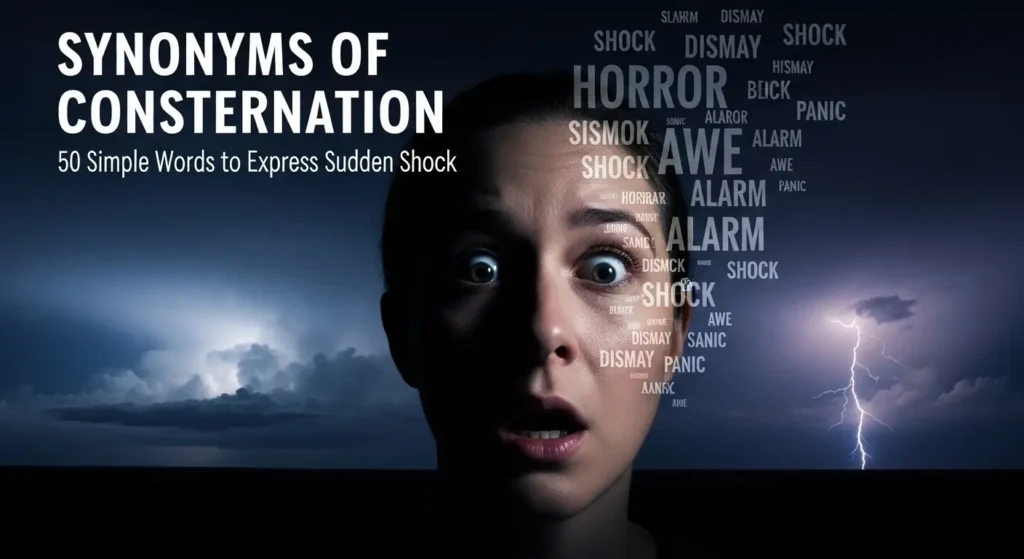

It was a normal school day. A student walked into class smiling, ready for a quiz. But the teacher suddenly announced a surprise test. The room went quiet. Faces changed. Some students looked worried. Others felt confused. That feeling in the room is what we call consternation.
“Sometimes a small surprise can shake a big calm mind.”
Consternation means a sudden feeling of worry, shock, or confusion. It happens when something unexpected occurs. It is not just fear. It is a mix of surprise and unease. You may feel stuck for a moment and not know what to do next.
Think about a blogger who publishes a post and gets negative comments. Or a writer who loses their work by mistake. These moments bring consternation. This word is very useful for students, bloggers, content creators, and anyone who uses English daily. It helps describe real emotions in a clear way.
“Words help us name our feelings and understand them better.”
Learning synonyms of consternation can make your language richer. It helps you avoid repeating the same word again and again. It also makes your writing more natural and interesting. Let’s explore simple and useful words that express similar feelings.
“A strong vocabulary builds a strong voice.”
MAIN CONTENT – SYNONYMS LIST
Alarm
Meaning: A sudden feeling of fear or worry.
Examples:
- I felt alarm when I heard a loud noise.
- Her face showed alarm during the storm.
Shock
Meaning: A strong surprise that upsets you.
Examples:
- He was in shock after the news.
- I felt shock when my phone broke.
Dismay
Meaning: A feeling of sadness and worry.
Examples:
- She looked in dismay at the mess.
- His voice showed dismay.
Panic
Meaning: A sudden strong fear.
Examples:
- I felt panic before the exam.
- She started to panic in the crowd.
Confusion
Meaning: Not understanding what is happening.
Examples:
- There was confusion in the room.
- I felt confusion during the lesson.
Distress
Meaning: Deep worry or pain.
Examples:
- He showed distress on his face.
- The news caused distress.
Fear
Meaning: Feeling afraid of something.
Examples:
- She felt fear in the dark.
- His eyes showed fear.
Anxiety
Meaning: A feeling of worry about something.
Examples:
- I had anxiety before the test.
- She felt anxiety all day.
Unease
Meaning: A slight feeling of worry.
Examples:
- I felt unease in the room.
- His tone gave me unease.
Worry
Meaning: Thinking too much about problems.
Examples:
- She felt worry about her grades.
- I could see worry on his face.
Horror
Meaning: A strong feeling of fear and shock.
Examples:
- He looked in horror at the scene.
- The story filled me with horror.
Startle
Meaning: A quick feeling of surprise.
Examples:
- The noise made me startle.
- She gave a small startle.
Surprise
Meaning: Feeling something unexpected.
Examples:
- I felt surprise at the gift.
- His face showed surprise.
Bewilderment
Meaning: Being very confused.
Examples:
- I looked in bewilderment.
- His eyes showed bewilderment.
Agitation
Meaning: Feeling upset or nervous.
Examples:
- She showed agitation in class.
- I felt agitation all day.
Nervousness
Meaning: Feeling uneasy or tense.
Examples:
- I had nervousness before speaking.
- His hands showed nervousness.
Disquiet
Meaning: A feeling of worry or fear.
Examples:
- I felt disquiet in the silence.
- Her face showed disquiet.
Apprehension
Meaning: Fear about what may happen.
Examples:
- I felt apprehension before the test.
- He had apprehension in his voice.
Terror
Meaning: Extreme fear.
Examples:
- She screamed in terror.
- His face showed terror.
Fright
Meaning: A sudden fear.
Examples:
- The loud sound gave me fright.
- She felt fright in the dark.
Uneasiness
Meaning: Feeling not calm or relaxed.
Examples:
- I felt uneasiness at night.
- His voice showed uneasiness.
Doubt
Meaning: Not feeling sure.
Examples:
- I had doubt about the answer.
- She showed doubt in her tone.
Trouble
Meaning: A feeling of worry or problem.
Examples:
- He felt trouble in his mind.
- I saw trouble on her face.
Concern
Meaning: Caring worry about something.
Examples:
- I felt concern for my friend.
- Her face showed concern.
Chaos
Meaning: A state of confusion.
Examples:
- The room was in chaos.
- I felt lost in the chaos.
Discomfort
Meaning: Feeling not at ease.
Examples:
- I felt discomfort in the crowd.
- His face showed discomfort.
Jolt
Meaning: A sudden shock or surprise.
Examples:
- The news gave me a jolt.
- I felt a jolt of fear.
Disturbance
Meaning: A break in calm feeling.
Examples:
- The noise caused disturbance.
- I felt a disturbance inside.
Tension
Meaning: A feeling of stress.
Examples:
- There was tension in the room.
- I felt tension before the talk.
Startlement
Meaning: A quick feeling of surprise.
Examples:
- She showed startlement.
- I felt startlement at the sound.
Perplexity
Meaning: A state of confusion.
Examples:
- I looked in perplexity.
- His face showed perplexity.
Disturbance
Meaning: Something that upsets peace.
Examples:
- The call caused disturbance.
- I felt a small disturbance.
Fearfulness
Meaning: Being full of fear.
Examples:
- She felt fearfulness at night.
- His eyes showed fearfulness.
Uneasy feeling
Meaning: A slight worry inside.
Examples:
- I had an uneasy feeling.
- She felt an uneasy feeling.
Disarray
Meaning: A state of mess or confusion.
Examples:
- The room was in disarray.
- My thoughts were in disarray.
Nervous fear
Meaning: Fear mixed with nerves.
Examples:
- I felt nervous fear.
- She showed nervous fear.
Frantic fear
Meaning: Wild and fast fear.
Examples:
- He ran in frantic fear.
- I felt frantic fear inside.
Inner worry
Meaning: Quiet worry inside.
Examples:
- I had inner worry.
- She showed inner worry.
Sudden fear
Meaning: Fear that comes quickly.
Examples:
- I felt sudden fear.
- He had sudden fear.
Shocked feeling
Meaning: Feeling surprised and upset.
Examples:
- I had a shocked feeling.
- She showed a shocked feeling.
Fear shock
Meaning: Fear mixed with surprise.
Examples:
- I felt fear shock.
- He had fear shock.
Mental unrest
Meaning: Mind not feeling calm.
Examples:
- I had mental unrest.
- She felt mental unrest.
Upset feeling
Meaning: Feeling not happy or calm.
Examples:
- I had an upset feeling.
- He showed upset feeling.
Scare
Meaning: A moment of fear.
Examples:
- That gave me a scare.
- She had a quick scare.
Worry shock
Meaning: Shock mixed with worry.
Examples:
- I felt worry shock.
- He showed worry shock.
Fear confusion
Meaning: Fear and not understanding.
Examples:
- I had fear confusion.
- She showed fear confusion.
Emotional shock
Meaning: Strong feeling shock.
Examples:
- I felt emotional shock.
- He showed emotional shock.
Sudden worry
Meaning: Quick feeling of worry.
Examples:
- I felt sudden worry.
- She had sudden worry.
Nervous shock
Meaning: Shock that makes you nervous.
Examples:
- I felt nervous shock.
- He showed nervous shock.
Conclusion
Learning synonyms of consternation is a smart way to grow your English. It helps you say the same idea in many fresh ways. This is very useful for students, bloggers, and anyone who wants to communicate better. When you know more words, your sentences feel more alive and clear.
“The right word can change a simple sentence into a powerful one.”
These words are not just for books. You can use them in emails, school essays, and daily talks. Try to use one new word each day. This small habit can make a big difference over time. You will feel more confident when you speak or write.
“Practice makes words a natural part of your voice.”
Keep exploring new words and keep using them. Language grows when you use it often. Start today and make your vocabulary stronger step by step.
“Every new word you learn is a step toward better expression.”